CSIRO Researchers Unveil Serverless Beacon to Revolutionize Secure Genomic Data Sharing on AWS

The Commonwealth Scientific and Industrial Research Organisation (CSIRO), Australia’s national science agency, has officially introduced Serverless Beacon (sBeacon)—a highly scalable, serverless architecture designed to securely query genomic variant data. Developed in collaboration with the Amazon Web Services (AWS) Prototyping and Scaling Team, sBeacon addresses long-standing challenges in international clinical and research networks by implementing the Global Alliance for Genomics and Health (GA4GH) Beacon standard. This breakthrough solution allows institutions to execute population-scale genomic queries in near real time while maintaining strict data sovereignty and zero-trust security protocols.
Background and Context of Genomic Data Sharing
Genomic medicine has evolved rapidly over the past two decades, transforming from a specialized academic pursuit into a cornerstone of modern clinical diagnostics and personalized healthcare. However, unlocking the full potential of genomic data requires analyzing massive cohorts spanning millions of individuals. Historically, researchers faced immense hurdles when attempting to share and cross-reference genomic information across international borders. Security concerns, massive file sizes, privacy regulations, and the prohibitive costs of centralized data storage often created isolated data silos.
To combat fragmentation, the GA4GH developed the Beacon protocol, establishing a standardized application programming interface (API) for discovering genomic and phenotypic data. While the protocol provided a unified conceptual framework, implementing it at a production scale—capable of handling mega-biobank datasets without exposing sensitive patient information—remained a formidable engineering challenge. CSIRO’s sBeacon directly solves this bottleneck by leveraging foundational AWS serverless technologies, eliminating the need for expensive, always-on infrastructure and reducing administrative overhead for research institutions.
Architectural Overview and Core Technologies
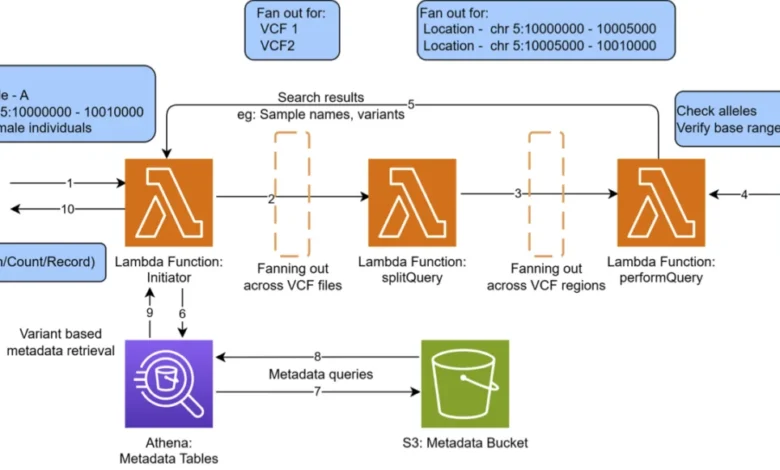
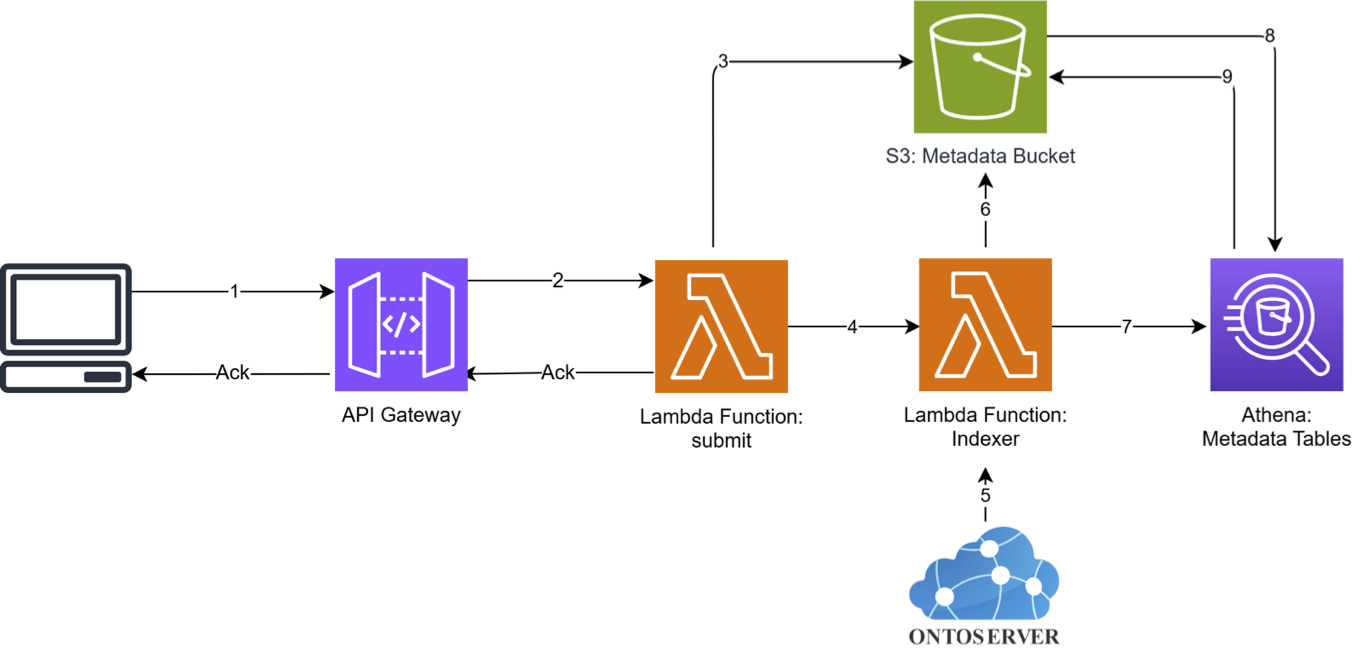
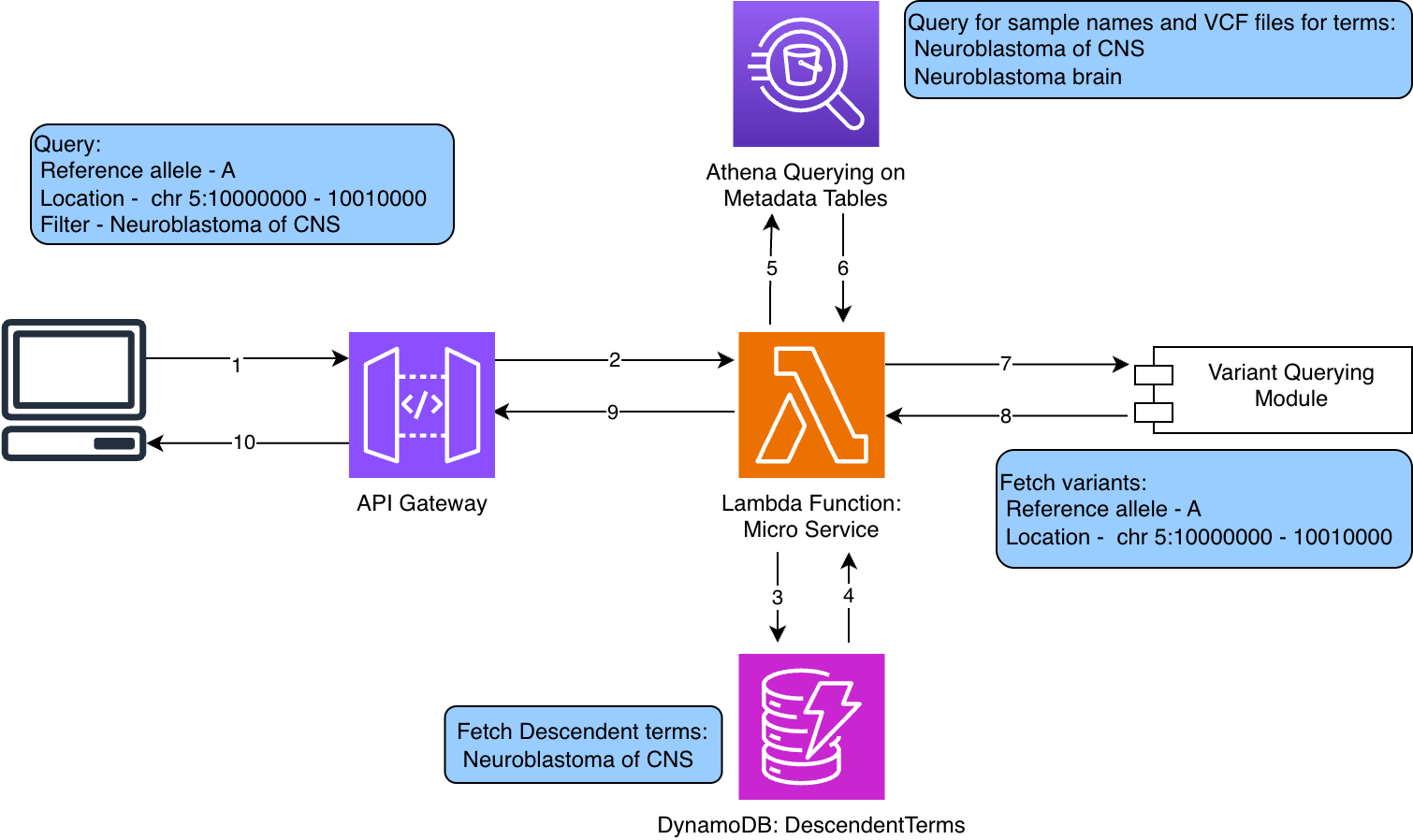
Built natively on AWS, sBeacon utilizes Amazon Simple Storage Service (Amazon S3), AWS Lambda, Amazon DynamoDB, and Amazon Athena. The system operates via two primary workflows: data onboarding and data querying.
During the onboarding phase, genomic datasets and their corresponding metadata—such as age, disease status, and geographical location—are registered rather than duplicated. Genomic Variant Call Format (VCF) files remain securely stored within their original locations, typically in an institution’s Amazon S3 bucket. Meanwhile, metadata is ingested into sBeacon’s storage architecture and formatted into Apache ORC files to enable rapid indexing via Amazon Athena and CSIRO’s Ontoserver or Ensembl OLS V4 specification.
When a query is initiated through the Amazon API Gateway, a modular network of AWS Lambda functions springs into action. For variant-specific queries, sBeacon deploys a sophisticated Variant Querying Module. An initiator Lambda function fans out parallel tasks across target VCF files stored in Amazon S3. Utilizing bcftools and htslib HTTP byte-range requests, the system reads only the specific tabix-indexed region of interest—averaging roughly 1 KB per query—without pulling raw genomic sequence bytes through Lambda memory. This innovative approach ensures that heavy computational lifting occurs dynamically, scaling elastically based on demand.
Case Study Performance: The 1000 Genomes Project
To demonstrate the efficacy and efficiency of sBeacon, CSIRO researchers tested the platform using chromosome 1 of the 1000 Genomes Project dataset, representing 8% of the human genome across 2,500 individuals. The multi-sample VCF file, sized at approximately 1.1 GB compressed, was ingested into the system in just 18 seconds at a negligible cost of less than one cent (USD 0.00052).
Query performance proved equally impressive. Fetching genotype data across a region of 10,000 base pairs for all 2,500 individuals took an average of 1.52 seconds, incurring a compute cost of roughly USD 0.00013 per query. Crucially, query latency remained consistent even as the volume of returned variants scaled significantly. Ongoing maintenance costs for storing the compressed metadata and genomic index files were calculated at a fraction of a cent per month, highlighting the dramatic cost-efficiency of a serverless approach compared to traditional legacy server fleets.
Zero-Trust Security and Data Sovereignty
As international healthcare compliance grows increasingly stringent, sBeacon has been engineered from the ground up to support a zero-trust security model. Authorization and access control are rigorously enforced within the Lambda layer using JSON Web Tokens (JWT) integrated with Amazon Cognito.
Users are categorized into distinct groups with granular access tiers, ranging from basic boolean checks (determining only whether a variant exists) to aggregate counts and full record-level details containing sample names. The system evaluates user permissions at the moment of query execution, ensuring that unauthorized or restricted tiers cannot trigger the calculation or retrieval of sensitive patient-level data, even if such data exists within the underlying VCF file.
Furthermore, sBeacon preserves data ownership through architectural decentralization. Because VCF files never leave the hosting organization’s Amazon S3 bucket, institutions retain total control over their data assets. Queries are executed via secure byte-range requests, meaning that external collaborators receive only aggregated analytical answers—such as boolean indicators, integer counts, or specific variant representations—rather than raw genetic sequences. Onboarding new datasets is similarly restricted to authenticated administrators, preventing unauthorized data injection.
Operational Considerations and Best Practices
While serverless infrastructures offer unprecedented scalability, deployment teams must navigate specific operational parameters. CSIRO’s engineering team selected AWS Lambda over AWS Step Functions to maximize payload capacity and support complex fan-in and fan-out parallel processing. However, developers must remain vigilant regarding concurrency limits. Burst queries running across massive genomic ranges can rapidly consume an account’s concurrent execution pool, potentially leading to throttling.
To mitigate risks, administrators are advised to monitor CloudWatch metrics closely, set up alarms for throttled invocations, and implement error-catching repositories to handle transient bottlenecks. Additionally, implementing provisioned concurrency on critical query-path functions can effectively eliminate cold-start latency during peak research hours, balancing speed against marginal increases in idle infrastructure costs.
Broader Implications for Global Health and Biomedical Research
The public release of sBeacon represents a pivotal milestone for translational genomics. By lowering the financial and technical barriers to compliant data sharing, sBeacon empowers hospitals, research institutes, and biobanks to form federated networks without compromising patient privacy or regulatory adherence.
Analysts note that as global genomic databases expand into the millions of genomes, traditional centralized data repositories will become increasingly unsustainable due to bandwidth and maintenance overhead. Decentralized, serverless models like sBeacon point the way forward, offering a sustainable blueprint for global scientific collaboration. Researchers, clinicians, and technology architects can access the complete source code via the project’s GitHub repository or deploy the infrastructure using Terraform to begin securely querying genomic data across collaborative international networks.
Related posts: